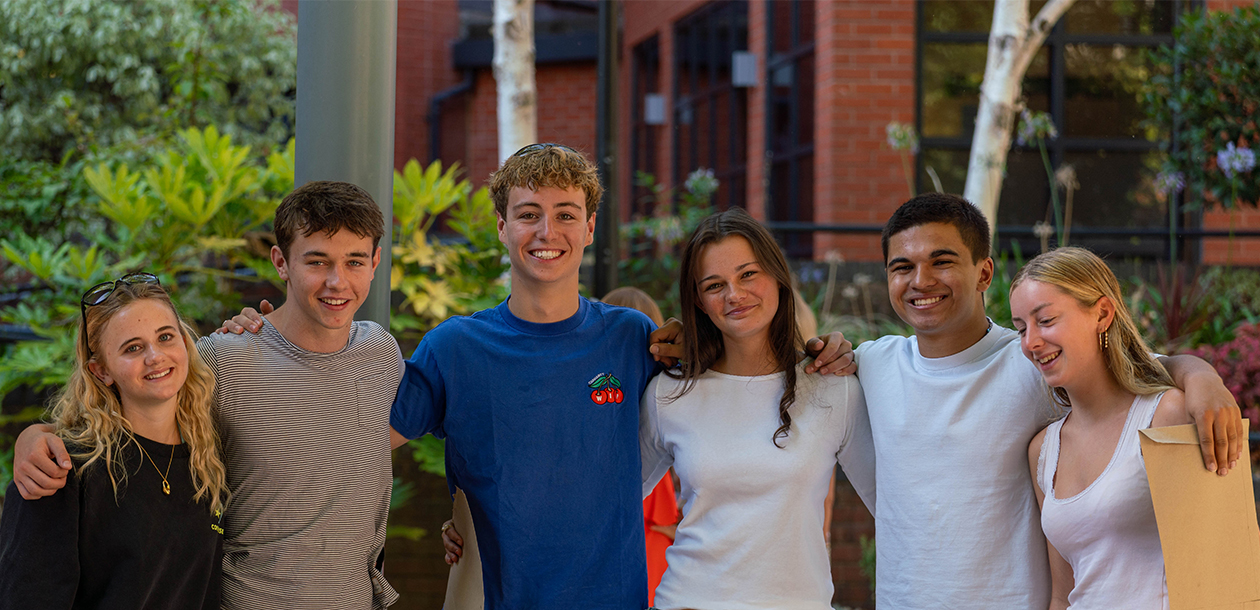
Sixth Form

We recognise that young adults flourish in an environment where their independence is encouraged and they are valued as leaders in the student community. This is reflected in the facilities specifically tailored to the Sixth Form, the individualised and flexible curriculum, our approach to pastoral care and an education for life beyond KHS.

The Hudson building opened in September 2017 and is home to our Sixth Formers and the English and Maths departments for all year groups. The space reflects the fact that our students are approaching adulthood and encourages independent study in an attractive environment.

Sixth Form facilities include a large independent learning area on the entire ground floor containing a café, library, social break-out spaces and quiet study areas. The building also has an impressive roof terrace, audio-visual suite, recording studio and bright classrooms. Our Sixth Formers use the roof terrace to relax and unwind which is complete with seating areas and table tennis.

Our Sixth Formers are given responsibility, treated as young adults and are expected to be an example to younger students. Our Head Students lead the Sixth Form Prefects who liaise with the School Councils in Years 7 to 11. They direct charitable activities and volunteering through links with local state schools and charities. They learn how to make a difference and that with privilege comes responsibility.


Sixth Form Transition and Programme

As an 11-18 school, we would hope that the majority of the current Year 11 students will make the transition to post 16 education with us, along with external applicants who will join us in Year 12 in September. We are committed to working with our internal students throughout Year 11 to support and assist them when making the important decisions regarding subject choice which are a necessary part of their transition to post 16 education.

Timeline:

September

Students will begin the process of researching possible career pathways and goals for their post 18 education in IS (Independent Study) lessons. They will be given access to a range of research tools to aid continued independent research throughout the year and will discuss possible A Level options with their teachers in lessons. All Year 11 students will also meet with a member of senior staff or sixth form team for an interview to discuss their post 16 intentions.

October

The main admissions event scheduled to allow students and parents to learn about the sixth form at KHS and discuss A Level options with subject leaders is the Sixth Form Information Evening and Subjects Fayre, scheduled to take place on Wednesday 16th October. At this event, subject leaders and current Year 13 students will be available in the ILC to discuss courses with Year 11 students. There will also be a presentation and a Q+A session about the sixth form lead by the Head of Sixth Form.

November

Following these events, the A Level options process will commence. Students will be asked to select four provisional A Level options. Option blocks will be finalised using provisional options and issues with subject choice or clashes will be followed up with students and parents.

Careers meetings

Students will be offered a further careers interview during the Spring Term.

January

A Level taster sessions

Following GCSE mock examinations in early January, Year 11 students will have the opportunity to try out a range of A Level lessons including new subjects such as Psychology, Business, Economics and Politics.

Spring / Summer Term

Further advice and guidance regarding the sixth form (and especially options choices) is available on request throughout the year via PTs or sixth form staff. If a student wishes to change courses at any point, they should make the school aware as soon as possible. Every effort will be made to ensure student’s first choice options are available although, as the timetabling process progresses and option blocks become fixed (approx. Easter), movement between courses may no longer be possible.

A Level subject choice will be confirmed with parents and students following GCSE results day, Thursday 21st August.

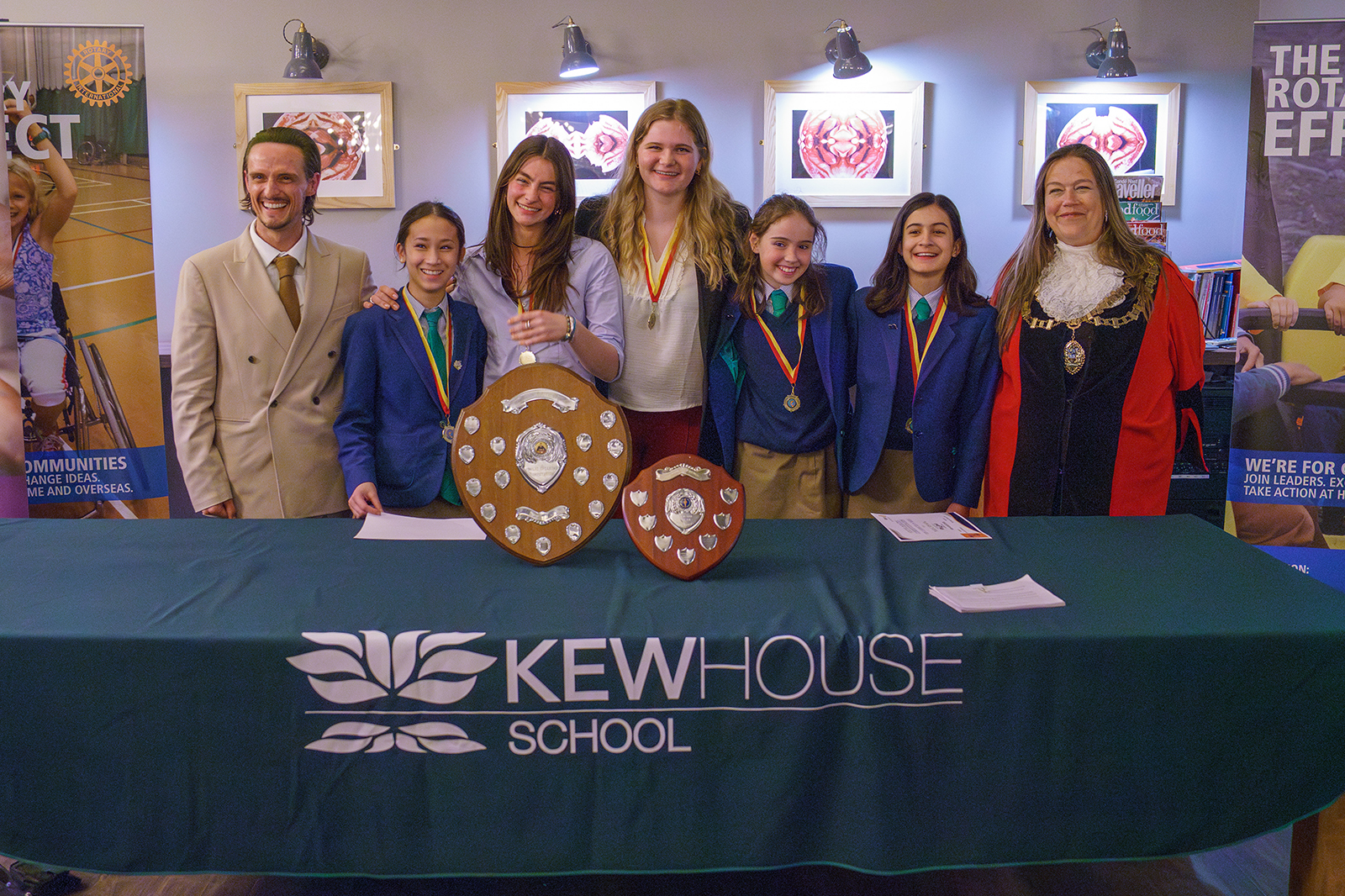
Sixth Form Scholarships

The school awards scholarships annually to recognise pupil excellence, potential and talent in specific areas. Scholarships are greatly sought after and only awarded after a process of rigorous selection. Scholars are nurtured in their endeavours by the school and are, in return, expected to enrich the school not only in their specialist area, but also across the institution by upholding, modelling, and embracing its ethos and core values.

Scholarships are awarded to recognise talent and potential across the curriculum. Scholars are appointed in drama, music, DT, and art. Four academic scholarships are also awarded annually. Scholarships may be honorary, may encompass a specific set of benefits or may attract remission of up to 20% of tuition fees.

Scholarship deadlines

  • Application Deadline Friday 1st November
  • Scholarship Assessments & Interviews take place throughout November
  • Further scholarships for current KHS Yr 11 pupils may be awarded after nomination to the scholarship committed as a result of outstanding performance in GCSE examinations or mock exams.
Sixth Form Admissions

The admissions criteria for internal candidates

• Achieving at least 5 x grade 9 – 4 at GCSE
• Obtaining grade 6 or better in the subjects students wish to study at A level
• For new subjects we will look at GCSE performance in core subjects and most indicative GCSE options

Internal candidates who do not meet these criteria will receive guidance to enrol onto full time education or other courses more suited to their needs. This may include an adjustment in options (which may include advice on taking a reduced number of A Levels at KHS), guidance on schemes such as apprenticeships, or a move to another educational provider more suited to their needs.

The school will always seek to support its students in making these decisions.

Admissions process for external applicants

For external applicants, in addition to registration and application forms we will seek a confidential reference, predicted grade information and the latest report from the applicant’s current school. Interviews for external applicants will commence during the Autumn Term. All offers will be subject to candidates meeting the admissions criteria.

  • Achieving at least 5 x grade 6 at GCSE including English and Maths
  • Obtaining at least a grade 6 in those subjects’ students wish to study at A Level or equivalent
  • For new subjects we will look at GCSE performance in core subjects and most indicative GCSE options
  • Obtaining at least GCSE grade 5 in English and Maths

It is the norm in all schools admitting students into sixth form study that confirmation of a place is ultimately at the discretion of the Headmaster. Students’ past school record and references will be taken into consideration in addition to academic attainment at GCSE.

Sixth Form Timetable

Weekly timetable for Sixth Formers 

Sixth Form students would normally take three A Levels and an EPQ. A standard timetable would consist of:

  • 6 hours of lessons per A Level, (2 x 3-hour sessions)
  • 6 hours of independent learning time (ILC) (2 x 3-hour sessions)
  • 1.5 hrs per week of GA (Gardener Award) Lessons – PSHEE, careers, UCAS and enrichment opportunities
  • One 1.5-hour session per week for the EPQ
  • Games on Wednesday afternoon

A student taking four A Levels would attend lessons for this subject in what would otherwise be their Independent Learning Centre (ILC) time.

Students are expected to be in school from 8.30 – 4.00pm Monday to Friday.

Why do we offer three courses?

All university admissions departments base their offers on three grades at A level, therefore in most cases it is better for students to devote their time and effort to maximising their grades in these required qualifications, rather than risk lowering them with the addition of a fourth.

The time within the curriculum where students are not studying one of their three subjects is directed specifically to maximise the quality of the student’s application through the careers and UCAS programmes, extra-curricular activities (such as volunteering or student council events), and completion of the EPQ and Duke of Edinburgh awards.

Is a fourth course possible?

Yes.

A student who opts for four courses must recognise that in addition to the workload generated by the fourth A Level, they will also be expected to complete these additional aspects of the curriculum because of their benefit to the quality of their application that they
provide. In addition to this, students opting for four A-Levels must be prepared for admissions departments at universities to offer places based on all four grades. A dip in performance caused by workload at some point in the course could potentially prove detrimental for the students’ admissions prospects.

We are confident that some students will be able to demonstrate the required academic potential and commitment to study a four-course programme. It must also be clear that this fourth A level will offer them some significant advantage in their post 18 progression route.

Students may be admitted to a four A Level programme of study by invitation or request. This will be permitted, provided these courses are consistent with their GCSE results and staff are confident they can manage the workload this will present.

Do we offer AS Levels?

All A Levels are linear courses which are assessed only at the end of the 2-year programme. The AS qualification has been decoupled from the A-Level course and is assessed in its own right as a stand-alone qualification. We do not, therefore offer AS courses.

UCAS and Careers

UCAS and the Careers Programme

The careers provision within the sixth form curriculum at Kew House has been developed to deliver successful applications to competitive universities, including the Russell Group and ‘Oxbridge’. A successful university application is not dependent solely on grades and requires students to demonstrate the commitment, skills, knowledge and experience necessary to complete their chosen course of study successfully. Universities look to admit candidates with a broad range of experiences, interests and skills and expect students to demonstrate in their applications how these experiences have influenced, and would benefit, their performance on their chosen course of study and the career path it may define. Students who are able to demonstrate this in their applications have significant advantages over those who are only able to provide evidence of academic ability. This is exemplified in the student’s personal statement.

Careers education is also a key element of the GA (Gardener Award) curriculum. Our aim is to enable students to develop the skills required to take the lead in determining their course and institution preferences and integrate this research into their independent study time. More information is available on our Careers page. The general layout of the careers programme is as follows:

Year 12

All students meet with an experienced member of Sixth Form staff in the first half term. From this initial careers interview targets are set to allow students to progress their Post 18 planning in collaboration with parents and with the support of tutors. Further specialist advice and guidance is available to support early entry, international applications, apprenticeships or other post-18 routes.

GA lessons support this planning in the Spring term, especially preparation for a one week work experience placement which takes place in June of Year 12. By Easter, students are encouraged to have narrowed down their possible fields of study. Attendance at university open days is encouraged to allow students to make an informed choice of institution.

The UCAS admissions process starts with a parent’s briefing early in the summer term.

Students will register online, meet admissions tutors, complete workshops on course/institution selection and personal statements and have the opportunity to work with their tutors and subject mentors to receive informed feedback on their options.

A dedicated programme of academic mentoring commences early in Year 12 for students looking to apply for Oxbridge or competitive courses such as medicine and dentistry. This is aimed at supporting and accelerating academic progress in addition to preparing students for admissions tests and interviews required for admission to these universities / courses.

Year 13

Students will be expected to complete the initial drafts of their personal statements over the summer holidays and will continue to work closely with assigned staff refine them early in Year 13. UCAS references will also be completed by subject staff and tutors early in the new academic year which will enable applications to be completed before the Christmas break.

A continuation of the Oxbridge programme in Year 13 will see them receive tailored support and guidance to prepare them for interview and admissions tests early in Year 13.

This schedule enables student to shift their focus for the remaining two terms of sixth form to critical examination preparation while they benefit from the continual support and advice available from the careers team, their personal tutors, and subject teachers.

Extended Project Qualification (EPQ)

All students are given the opportunity to complete the extended project qualification (EPQ) in addition to their A Level subjects. The EPQ is highly valued by universities and enables admissions officers to discriminate between candidates with a similar academic profile. The EPQ qualification is equivalent to half an A level and students are able to obtain grades up to an A*.

Our approach to the extended project is to add breadth to students’ Sixth Form studies by teaching skills, approaches, presentation techniques and research methods through this
broad-based course. The course seeks to expose students to new disciplines, areas of thinking and subjects, before they research a question of their own choosing.

Students will be assigned an EPQ mentor who will support them in the research, planning and writing of a 6000-word dissertation, the creation of an artefact or the development and realisation of a scientific investigation or performance. Students end the course by giving a presentation on their work to an invited audience with a question-and-answer session to follow. This presentation is also assessed.

The course is designed to develop skills in research (including critical analysis of documents and source evaluation), analysis, presentation, ethical enquiry and philosophical argument.
The course is intended to be academically rigorous and will provide them with application materials for their UCAS Personal Statements.

Duke of Edinburgh Award

Duke of Edinburgh awards will be offered to Gold level for Sixth Form students. Students who have achieved Bronze and Silver are highly recommended to pursue Gold as the skills gained
are highly regarded by employers and Universities. If students have not completed the Bronze award before joining the sixth form at KHS they are still able to participate as candidates can
start on the Silver award without completing Bronze with some additional requirements.

For Students: Making your Sixth Form choices

Kew House School offers an extensive range of Level 3 qualifications which are designed to facilitate progression to all higher education courses. It is vital that you understand the nature of the course, its content and assessment arrangements before making decisions. This guide is intended to assist you in your decisions. Please note some combinations of subjects are not desirable. These will be discussed as part of your interview.

How do I choose my options?

Start by looking carefully at your aspirations for the future: What interests you? What do you hope to study or do in the future? Universities publish entry criteria for all their courses on their websites and there are many search tools that can be used to streamline your research. Look at the courses on offer at Kew House. What combinations of subject are compatible with your aspirations? You must remember that these are two-year courses and you are committing to study these right through to their conclusion. You should seek advice; your personal tutor and teachers will assist. Careers guidance will be offered to you.

Ask yourself:

• Will I be good at this course and will it sustain my interest?
• Will the course enable me to proceed to university or employment in the field I am interested in?
• Does the course build upon my academic strengths based on my GCSE success?

Studying a course that interests you is most important. Taking a subject just because it is ‘useful’ may not yield the success you seek. In the final analysis you will select a range of subjects to suit your needs and interests. Not all combinations of subject are desirable.

You must also be aware that not all combinations of subject will be available due to timetable constraints.

So, what are Universities looking for?

Universities expect their conditional offers for more competitive courses to be three, very good, A-level grades. These are often referenced in university prospectuses.

Include subjects that are appropriate preparation for your preferred degree course. Some universities may indicate certain subjects that include a substantial element of practical skill to be of less value, take advice about choosing more than one of these subjects in your three, unless they are part of your preparation for a single, specialist field of study in higher education.

Conversely some courses restrict access to courses unless key combinations of study are in place (e.g. Medicine will require Chemistry and Biology, Engineering will require Maths and Physics). Some universities take a more liberal approach to subjects studied.

In general it is advisable not to specialise too early, most universities advise students to take at least two of the more traditional academic courses at A level as they are highly respected and are known to provide the skills needed to be successful on the degree. These are
generally considered to be: Maths, Further Maths, Physics, Chemistry, Biology, History, Geography, Languages and English Literature.

  • Academic

    Outstanding Russell Group Offers

  • Academic

    Voices of the Future

  • Academic

    Celebrating an Outstanding Summer of Achievement